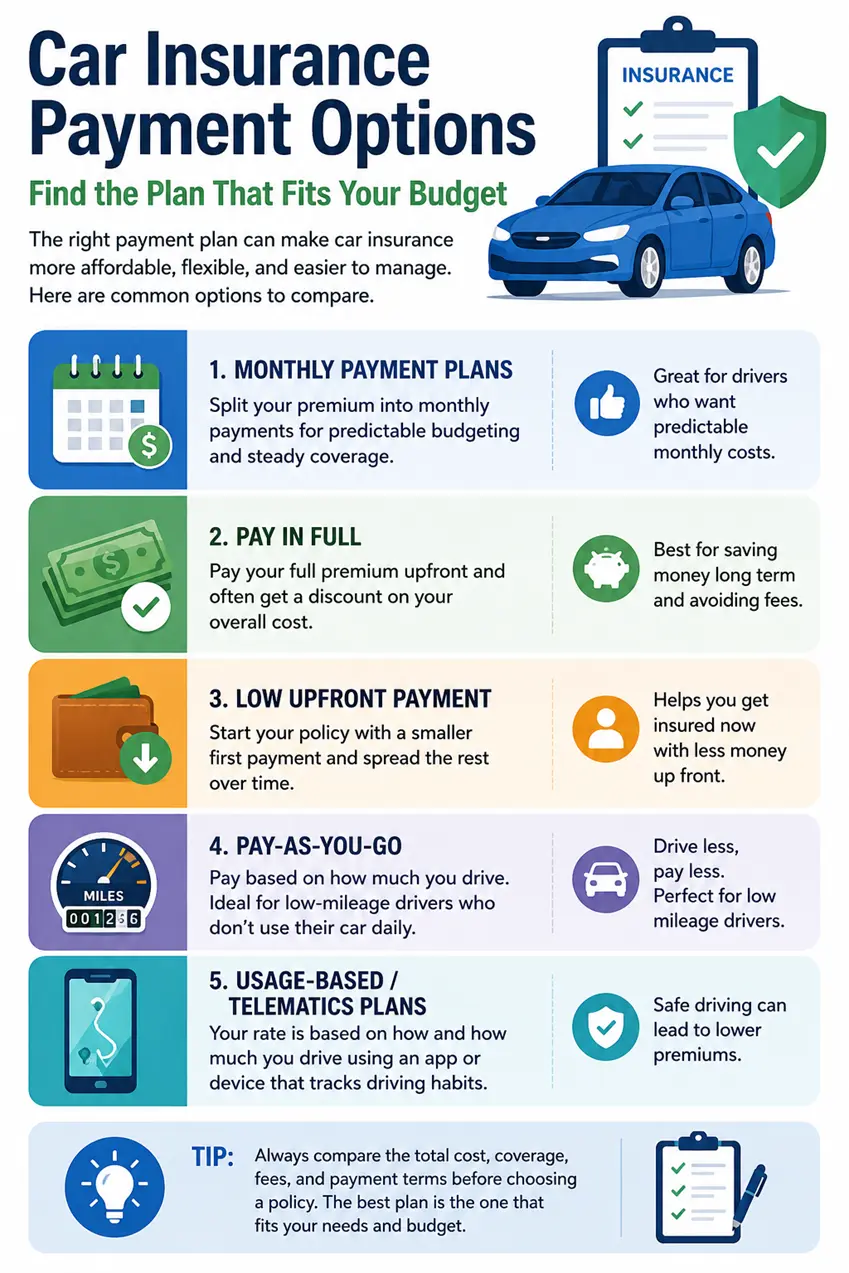
Car insurance is one of those expenses that can sneak up on people. You know you need it, you know driving without it can lead to serious problems, but the upfront cost can still feel like a lot—especially when rent, groceries, gas, and other bills are already taking a big bite out of your budget.
That is one reason more drivers are paying closer attention to how car insurance is paid, not just how much it costs overall. A policy may look affordable when you see the total six-month premium, but if the first payment is too high, it may not work for someone who needs coverage right away. For many drivers, the real question is simple: “Can I start this policy without draining my bank account today?”
This is where online comparison tools have become more useful. Instead of calling one company after another or guessing which insurer might offer a more flexible payment plan, drivers can use comparison-focused resources to review different options, payment structures, and coverage levels before making a decision.
Why Payment Options Matter More Than Ever
For years, many drivers focused mainly on the final price of a car insurance policy. That still matters, of course. Nobody wants to overpay. But today, the first payment can be just as important as the total premium.
Some policies require a larger down payment before coverage begins. Others may offer monthly installments, lower upfront costs, or more flexible billing arrangements. For drivers living paycheck to paycheck, that difference can be huge.
Imagine two quotes. One policy cost slightly less overall but requires a large payment today. Another costs a little more over time but has a smaller first payment and easier monthly billing. The cheaper policy is not always the better choice if the upfront cost makes it impossible to start coverage.
That is why drivers are now comparing more than just the premium. They are looking at deposit requirements, monthly payment schedules, fees, cancellation rules, and whether coverage can begin the same day.
Online Comparison Tools Make the Process Easier
Shopping for car insurance used to feel like a chore. You had to contact several companies, repeat the same information again and again, and then try to compare quotes that were not always presented in the same way.
Online comparison tools make that process easier by helping drivers look at multiple possibilities in one place. These websites are especially helpful for people who want to understand what types of payment arrangements may be available before they commit.
For example, drivers researching lower upfront costs may use resources focused on no down payment car insurance comparisons to better understand how these policies are commonly structured. The goal is not to assume that one option is perfect for everyone, but to compare possible choices and see what fits a driver’s budget and coverage needs.
It is important to remember that comparison websites are research tools. They can help you review options, learn what terms mean, and compare different approaches, but drivers should still read the final policy details carefully before buying.
What “No Down Payment” Really Means
The phrase “no down payment car insurance” can sound a little confusing. In many cases, it does not mean the policy starts completely free. Most insurers require some type of first payment to activate coverage. What people usually mean by “no down payment” is a policy with a lower initial payment, where the cost is spread out through monthly installments.
That can be helpful, but it is still worth checking the numbers. A lower first payment may come with higher monthly payments or additional installment fees. In other words, the policy may be easier to start, but not always cheaper in the long run.
Drivers should compare the total cost of the policy, not just the amount needed today. A manageable first payment is useful, but the monthly bill also needs to fit the budget. Otherwise, the policy could become difficult to keep active, and a lapse in coverage can create even more problems later.
Buy Now, Pay Later Options Are Getting Attention
The idea of “buy now, pay later” has become common in many parts of everyday life, from online shopping to travel bookings. Now, some drivers are also looking for similar flexibility when it comes to car insurance.
In the insurance world, buy now, pay later usually refers to payment arrangements that allow a driver to begin coverage with a smaller initial amount and pay the remaining balance over time. This can appeal to people who need proof of insurance quickly, are starting a new job, recently bought a vehicle, or simply cannot afford a large upfront payment.
Drivers who want to compare these types of flexible arrangements may find it helpful to review buy now pay later car insurance comparison options to see how different payment approaches may work. Again, the point is comparison and research—not assuming every option will be the right fit.
Coverage Still Matters More Than the Payment Plan
Flexible payments are helpful, but they should not distract drivers from the most important part of the policy: the coverage itself.
A policy with a low first payment may look attractive, but it still needs to provide enough protection. Drivers should check liability limits, deductibles, uninsured motorist coverage, comprehensive and collision options, and any exclusions. Minimum coverage may satisfy state requirements, but it may not fully protect you financially after a serious accident.
It is also smart to compare deductibles. A higher deductible may lower the monthly premium, but it also means you will pay more out of pocket if you file a claim. That can be risky if you do not have emergency savings.
The best choice is usually the one that balances affordability with realistic protection. A payment plan should make coverage easier to manage, not push you into a policy that leaves you exposed.
How Drivers Can Compare Smarter
Before choosing a policy, drivers should slow down and look at the full picture. Start by comparing the first payment, monthly payment, total policy cost, fees, and cancellation terms. Then compare the coverage limits and deductibles side by side.
It also helps to be honest about your driving habits. If you drive long distances every day, you may need stronger protection than someone who only drives occasionally. If your vehicle is financed or leased, you may also be required to carry full coverage.
Drivers should also ask about discounts. Safe driving discounts, paperless billing, automatic payments, defensive driving courses, bundling, and low-mileage programs may help reduce costs. Even small discounts can make monthly payments easier to handle.
The Bottom Line
Car insurance is not just about finding the lowest price anymore. For many drivers, it is about finding coverage they can actually start and keep active without putting too much pressure on their budget.
Online comparison tools can make that process less stressful by helping drivers review payment options, compare lower upfront cost policies, and understand flexible billing choices before making a decision. The key is to use those tools wisely, read the details, and avoid choosing a policy based only on the first payment.
A smaller upfront cost can be helpful, but the best policy is one that offers a realistic balance between price, payment flexibility, and real protection on the road.
Also Read
- Adapt or Die: How High-Tech Innovation is Bulldozing the Old School Dumpster Business Model
- The Right Words For A Celebration of Life Ceremony Invitation
- How to Choose the Right Foundation Type and Reduce the Need for Home Foundation Repair
