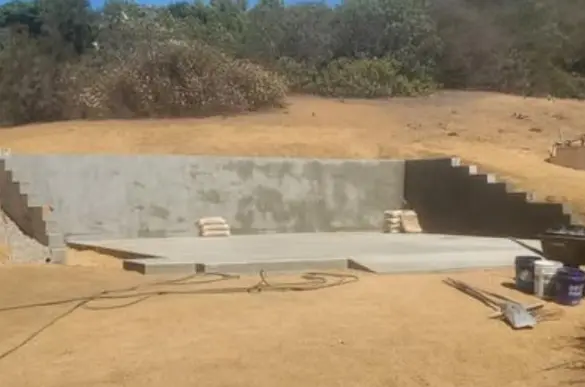
Foundation issues range from mild to severe, and most homeowners hope the problem falls on the repairable side. Many homes with cracks, uneven floors, or settling issues can be successfully stabilized with professional Foundation Repair techniques. But there are situations where damage becomes so advanced, widespread, or structurally compromised that repairing the foundation is no longer safe or practical. Knowing where this line is helps homeowners avoid investing money in a structure that cannot be restored to long-term stability.
As homeowners begin researching options such as Foundation Repair San Diego, the real question becomes whether the home is still structurally sound enough for repair or if the damage has progressed to the point where it is no longer safe to recover.
When Structural Movement Becomes Too Advanced
A home relies on an evenly supported foundation to keep weight distributed correctly. When certain parts of the foundation sink or shift significantly, the entire structure begins to deform. Walls lean, floors slope aggressively, and framing twists in ways that weaken the home’s core. When movement becomes severe enough, repair no longer restores the original stability.
Foundation repair may no longer be safe when:
• Floors slope several inches across a short distance
• Multiple structural beams have shifted
• Walls lean significantly inward or outward
• Ceilings separate noticeably from walls
• Windows and doors are completely misaligned throughout the home
Once the structure loses alignment across numerous areas, stabilizing it may introduce risk rather than fixing the root problem.
When the Foundation Has Lost Its Structural Integrity
Major cracks can be repaired, but fractures that extend deeply through footings, grade beams, or entire sections of the slab may signal irreversible failure. A foundation is considered unsafe for repair when its load-bearing elements crumble, split apart, or collapse in a way that jeopardizes the entire home.
A foundation may be beyond repair when:
• Footings have collapsed or crushed under pressure
• The slab has broken into multiple sections
• Support beams or piers have failed completely
• Settlement exceeds what pier systems can correct
• Soil conditions have destroyed structural elements beyond stabilization
Repairing a foundation requires strong structural components to attach new support systems. If those components have disintegrated, repair cannot be performed safely.
When the Soil Can No Longer Support the Home
Soil plays a crucial role in Foundation Repair. If the ground beneath the home cannot provide stable long-term support, even the best repair methods may fail. Certain soil conditions make repair unsafe because any new stabilization system will continue to shift on unstable ground.
A foundation may be unsafe to repair when:
• Soil erosion has created large voids beneath the home
• Flooding repeatedly weakens the soil profile
• Expansive clay continually expands and contracts dramatically
• The home was built on improperly compacted fill dirt
• The supporting soil has partially collapsed
If the soil cannot maintain stable pressure, repairing the structure may provide only temporary relief before the home shifts again.
When Repair Costs Exceed Reasonable Structural Value
Even if a foundation can technically be repaired, the cost might outweigh the home’s long-term value or safety. A foundation is often considered beyond worthwhile repair when the investment required surpasses what the house will realistically be worth afterward.
Repair may not be feasible when:
• Multiple structural systems need rebuilding
• The home requires dozens of piers to stabilize
• Major plumbing, framing, and flooring damage must also be repaired
• A complete foundation replacement is needed rather than stabilization
In these situations, repairing the foundation may not be financially responsible.
When Repair Requires Lifting the House Beyond Safe Limits
Some repairs require lifting the home to relevel it. However, lifting a house that has twisted, bowed, or suffered severe movement can cause further damage. If a home has warped excessively, lifting it can cause the framing to tear apart, break plumbing lines, or destabilize other parts of the structure.
Foundation repair may be unsafe when:
• Lifting the home would cause structural collapse
• The home cannot be supported safely during elevation
• The framing has weakened so much that movement risks failure
If lifting the structure introduces danger, repair is often ruled out.
When There Are Serious Warning Signs of Structural Failure
Certain signs indicate a foundation is reaching irreversible failure. These signs suggest that repair might be unsafe or ineffective because the house has already been compromised structurally.
Warning signs include:
• Large horizontal cracks in basement or crawl space walls
• Walls bowing inward
• Sagging rooflines caused by foundation movement
• Doors or windows separating from the framing by large gaps
• Floors dipping or sinking in severe patterns
• Visible movement of exterior walls
These are symptoms of deep structural stress that may be too extensive to correct safely.
When Professionals Recommend Replacement Instead of Repair
Foundation experts perform detailed inspections using elevation measurements, structural analysis, and soil evaluation. When professionals advise a homeowner that repair is not safe, it is based on clear structural evidence. In such cases, the recommended solution may be partial or complete foundation replacement rather than stabilization.
Replacement becomes the safest route when:
• Damage is too extensive for piers or jacks
• Soil conditions make future stability unpredictable
• Repairs would only provide temporary relief
• Costs are comparable to full reconstruction
• Safety cannot be guaranteed
Professionals rely on long-term performance data, not just visual symptoms, to determine the safest course of action.
Conclusion
A foundation is no longer repairable when structural integrity, soil stability, safety concerns, or the overall cost of repair make stabilization impractical or unsafe. While many homes respond well to modern foundation repair solutions, there are limits to what can be corrected once severe movement or structural failure occurs. Better Foundation Repair San Diego continues to guide homeowners through these situations by offering expert evaluations, transparent recommendations, and reliable support when determining the safest and most practical path forward.
Also Read-Key Considerations When Touring a Home
